
Getting IEC and CDSCO Approval for Gastroenterology Clinical Trials in India: A Step-by-Step Guide
A step-by-step guide to IEC and CDSCO approval for gastroenterology clinical trials in India - documents, timelines, and common pitfalls. No need to read long PDFs.


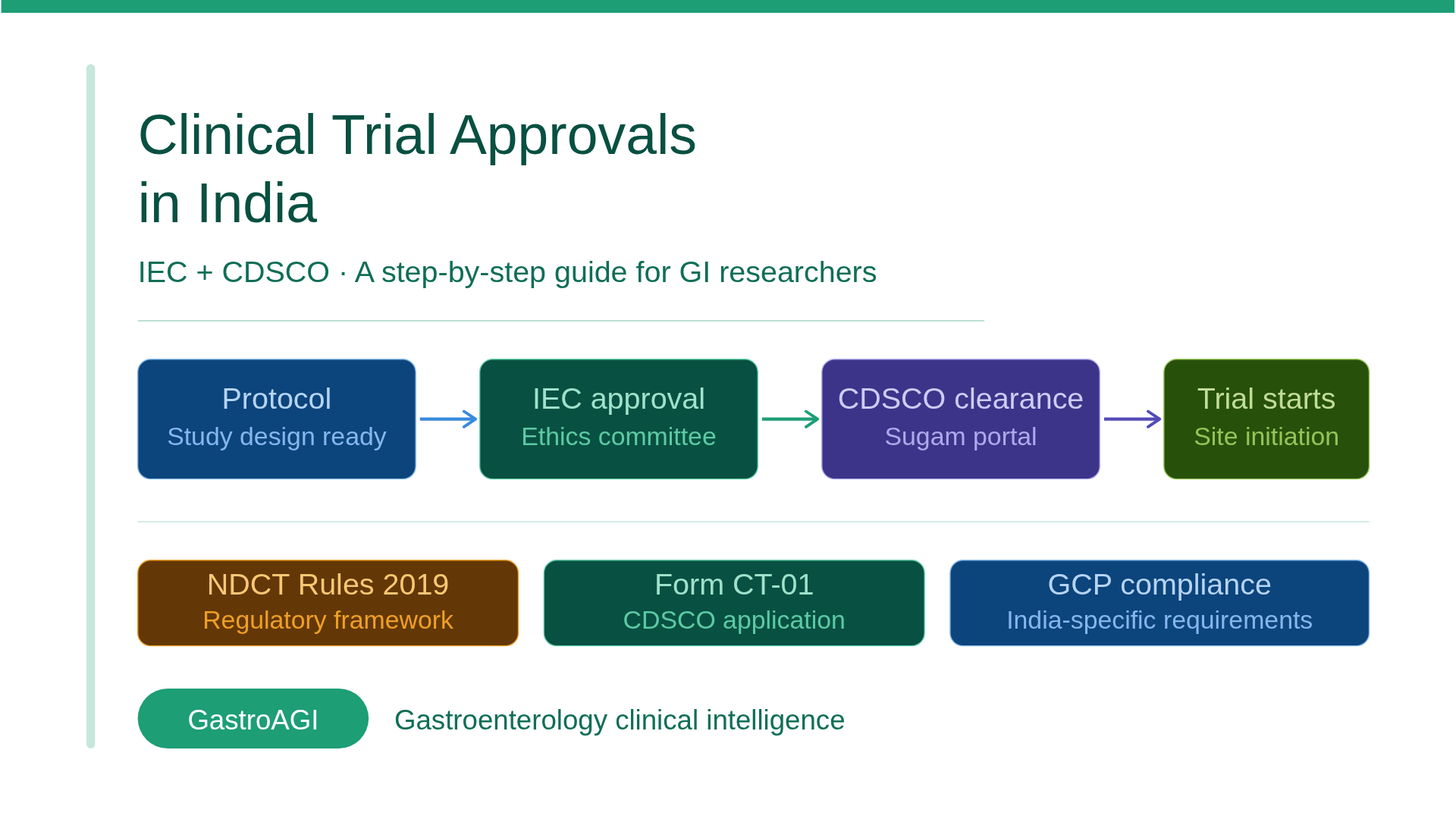
You have a well-designed gastroenterology trial - a prospective cohort comparing fecal microbiota transplantation protocols in recurrent Clostridioides difficile, or a phase II drug trial in refractory IBD. The science is solid. The question everyone asks next is the one nobody teaches in fellowship: How do you actually get this approved in India? This guide walks through the IEC and CDSCO process for gastroenterology clinical trials - what to submit, in what order, and where most investigators lose months they could have saved.
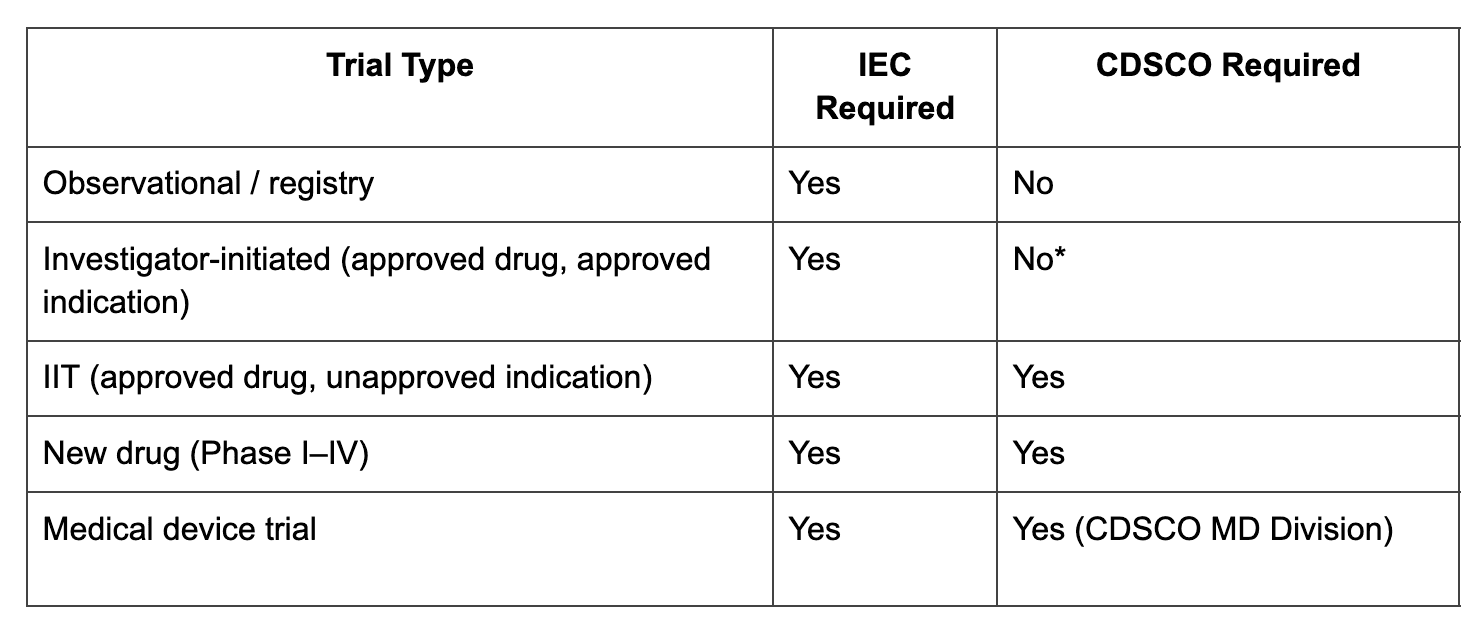
The regulatory framework for clinical trials in India changed substantially with the New Drugs and Clinical Trials (NDCT) Rules, 2019, replacing the older Schedule Y under the Drugs and Cosmetics Act. For gastroenterologists planning trials - whether interventional drug studies, device evaluations, investigator-initiated trials (IITs), or biomarker studies - the dual-approval requirement from an IEC (Institutional Ethics Committee) and CDSCO (Central Drugs Standard Control Organisation) is non-negotiable for any trial involving a new drug, unapproved indication, or medical device. Understanding which of your studies requires CDSCO approval versus IEC-only is the first decision point, and getting it wrong costs weeks. Purely observational or registry-based gastroenterology studies typically require IEC approval alone. Any trial involving an investigational new drug, biological, or device - including approved drugs used in unapproved indications - requires CDSCO clearance in addition.
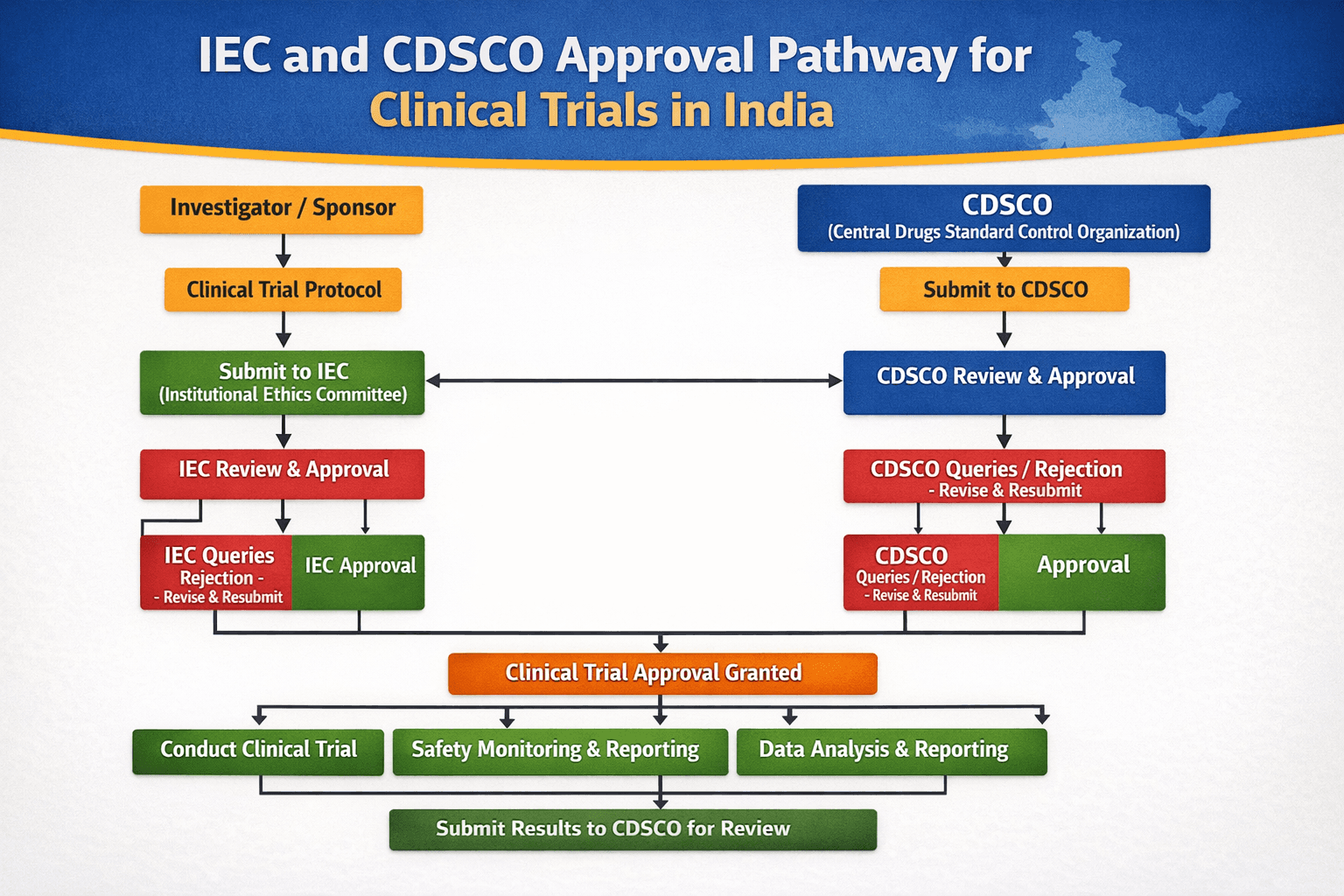
Understanding the IEC Submission Process for GI Clinical Trials
The Institutional Ethics Committee is your first stop, and its approval must precede your CDSCO submission. Per the NDCT Rules 2019, all IECs conducting review of clinical trials must be registered with the CDSCO's Ethics Committee Registration portal — confirm your institution's IEC registration status before submission, as a lapsed or unregistered IEC renders your approval invalid.
The IEC submission package for a gastroenterology trial typically includes: the full protocol (including study design, inclusion/exclusion criteria, primary and secondary endpoints, statistical plan), the investigator's brochure or product monograph if a drug is involved, all versions of the informed consent document (ICF) in English and the regional language, the case report form, participant recruitment material, any payment or compensation details, investigator CVs, laboratory certifications (NABL accreditation for central labs), and the signed 1572-equivalent declaration (Form CT-04 under NDCT Rules).
For GI trials specifically, pay attention to the ICF for invasive procedures - endoscopy, colonoscopy, biopsy, breath tests - each procedural risk must be individually itemised. Ethics committees frequently return GI protocols requesting greater granularity around procedural adverse event disclosures. A clean, procedure-specific ICF dramatically reduces the likelihood of a major revision query.
IEC review timelines under the NDCT Rules are capped at 30 working days from the date of complete submission. In practice, academic hospital IECs at AIIMS, CMC Vellore, or PGI Chandigarh with well-resourced committees often meet this window. Smaller institutional committees may take longer, particularly if a quorum for review of a trial in your subspecialty is harder to convene.
Clinical Scenario: When an IEC Query Stalls a Trial for Three Months
A gastroenterology department at a tertiary care centre in western India designed an investigator-initiated trial evaluating the efficacy of rifaximin in hepatic encephalopathy prophylaxis in cirrhotic patients post-TIPS procedure. The protocol was methodologically rigorous - randomised, double-blind, placebo-controlled, with validated psychometric endpoints (PHES score). The IEC submission was submitted in full.
The committee returned a major query six weeks later: the ICF referenced the TIPS procedure as "routine" without itemising its specific risks separately from the trial intervention's risks. Additionally, the statistical plan mentioned interim analysis at 50% enrolment, but no independent data safety monitoring board (DSMB) had been constituted. The investigators had to redraft the ICF, constitute a three-member DSMB with at least one external biostatistician, and resubmit - adding eleven weeks to their timeline. Both issues were entirely preventable with a pre-submission IEC consultation, which most committees offer and few investigators utilise.
Navigating the CDSCO Submission: Form CT-01 and Beyond
Once IEC approval is in hand, CDSCO submission for a new drug clinical trial (Phase I–IV) or a BA/BE study proceeds through the online Sugam portal (cdscoonline.gov.in). The primary application form is Form CT-01, accompanied by a fee structure based on trial phase and sponsor type — notably, academic investigator-initiated trials may qualify for reduced fees under the NDCT Rules, a provision that many academic gastroenterologists are unaware of.
The CDSCO dossier mirrors much of the IEC package, with additional requirements: a comprehensive investigator brochure (Module 2 and 3 summaries for new molecular entities), site inspection reports if requested, a Phase I safety data summary for Phase II/III applications, and the IEC approval letter with the approved protocol version clearly dated.
For gastroenterology specifically, biologics trials - anti-TNF agents, anti-integrin therapies, JAK inhibitors in IBD - require a full Common Technical Document (CTD) format submission. This is the most documentation-intensive path and typically warrants engagement of a regulatory affairs professional or a CRO with CDSCO experience if your institution does not have an in-house regulatory cell.
CDSCO review timelines under NDCT Rules 2019 are mandated at 30 working days for new drug trials, with an additional 15-day window for clarification queries. In practice, expect 60–90 days for a complete cycle, particularly for novel molecules. Site inspection, where mandated by CDSCO, adds further time. Maintain a clean regulatory file from day one - CDSCO inspectors review source data, consent processes, and deviations rigorously.
*Some institutions require CDSCO intimation even for IITs - confirm with your regulatory office.
A Frequently Overlooked Point: Protocol Version Control Between IEC and CDSCO
One of the most common regulatory complications in gastroenterology trials is a version mismatch between the protocol approved by the IEC and the version submitted to CDSCO. If the IEC requests a protocol amendment during its review and the investigator incorporates those changes before submitting to CDSCO, the CDSCO receives a protocol version that does not exist in the IEC's approval letter. This creates a documentation inconsistency that can stall site initiation or trigger a non-compliance finding during audit. The correct approach: finalise the protocol only after IEC approval, submit that exact version — version number, date, and all - to CDSCO without further modification. Any subsequent amendments go to both bodies simultaneously with a formal amendment notification.
Bottom Line for Clinical Practice
Determine your regulatory pathway first: Observational GI studies need IEC only. Trials involving investigational drugs, approved drugs in unapproved indications, or devices require both IEC and CDSCO approval.
Confirm IEC registration status before submission: An unregistered IEC renders your approval legally invalid under NDCT Rules 2019. Check current registration at the CDSCO ethics committee portal.
Write procedure-specific risks into the ICF: For endoscopy, colonoscopy, liver biopsy, and other GI procedures, each procedural risk must be itemised separately from the drug or intervention risk - the most common reason for IEC major queries in gastroenterology trials.
Constitute a DSMB before IEC submission if your protocol includes an interim analysis: This is a formal requirement, not a suggestion, and adding it post-query adds weeks.
Maintain strict protocol version control: The version number and date on the IEC approval letter must match exactly what is submitted to CDSCO. Any discrepancy is a regulatory finding.
Running a clinical trial in gastroenterology in India is increasingly feasible — the regulatory framework under NDCT Rules 2019 is clearer than what preceded it, and CDSCO's Sugam portal has reduced the chaos of physical submissions. But the process still rewards investigators who understand it before they start, not after the first query comes back. If you are designing a gastroenterology trial and want to work through your regulatory pathway, trial design questions, or endpoint selection, walk GastroAGI through your protocol details - it will return a structured, guideline-referenced response in seconds.
References

We are pioneers in clinical intelligence, dedicated to helping gastroenterologists harness the power of artificial intelligence to drive precision, efficiency, and patient growth.